

The easiest way to lose a girl from sport is to make a normal body feel like a private problem.
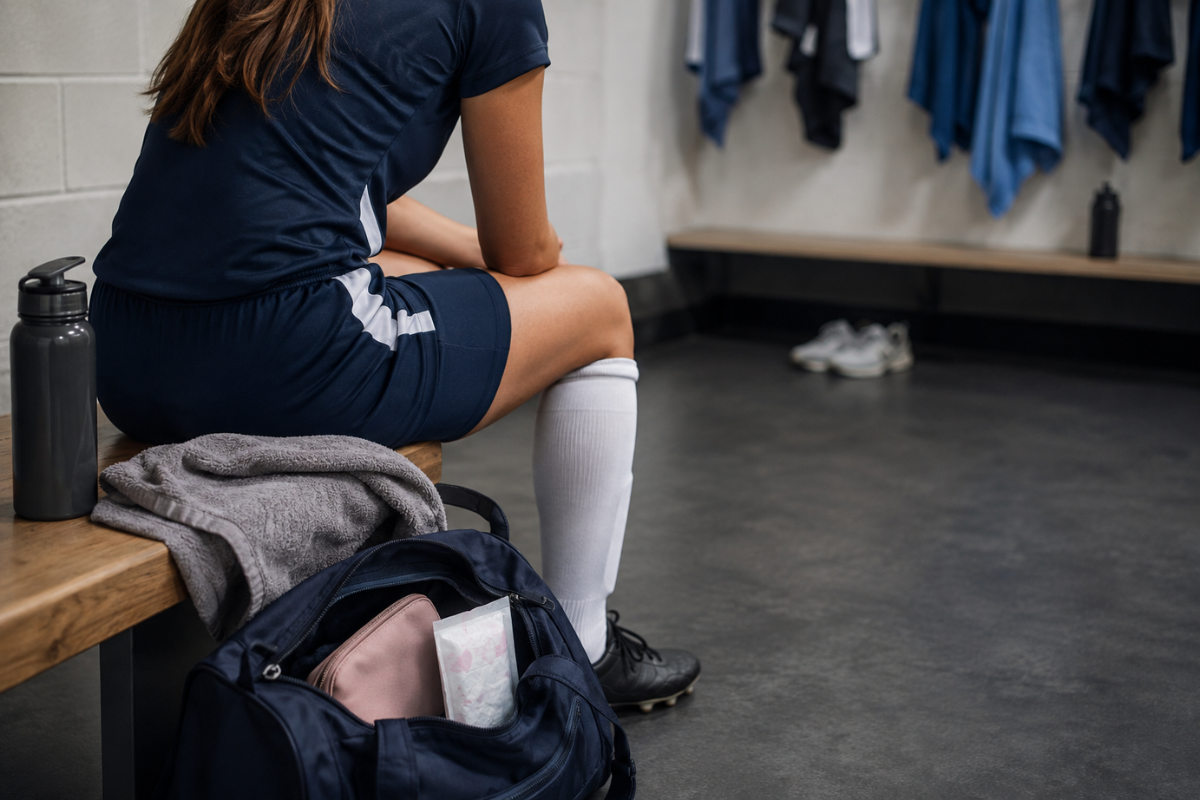
It usually happens quietly. A girl gets her period before training. She is worried about leaking. She does not know whether there are products in the bathroom. She is wearing kit she already feels self-conscious in. She has cramps, or fatigue, or a dull anxiety she cannot quite name. The coach is not unkind. The club is not hostile. Nobody has said she cannot play.
Still, the session has become harder to attend.
This is how sport loses girls. Not always through one dramatic failure, but through a series of small signals that tell them they are expected to manage discomfort, embarrassment and uncertainty alone. A missed session becomes two. A difficult conversation is avoided. A girl who once felt at home in sport begins to feel exposed in it.
Adults often miss this because the absence looks ordinary. She is busy. She has schoolwork. She has lost interest. She is not as committed as before.
Maybe.
Or maybe sport has become one more place where her body feels like a problem.
Menstrual health is a participation issue, even though sport has been slow to treat it that way. The menstrual cycle is part of life for most girls and women. It should not be shocking, mysterious or unspeakable in the places where they train, compete, change, recover and build confidence. Yet in many schools and clubs, periods remain something girls are expected to handle quietly, with little planning from the adults around them.
Sport Ireland’s Her Moves initiative has identified menstruation as a key challenge of female puberty and a barrier to participation in sport. Its period-supportive resources state that 54% of young women have felt unable to play sport because of period-related symptoms, while girls are dropping out of sport at twice the rate of boys.
The same pattern appears in UK school sport. Youth Sport Trust’s 2024 Girls Active survey found that periods are the biggest barrier to participation for girls aged 11–13 and 14–15, while UK parliamentary evidence cites research showing that around seven in ten girls regularly or sometimes avoid being active when on their period. Pain, fear of leaking, tiredness and feeling self-conscious were the main reasons given.
That should change the conversation.
A girl missing training because of her period should not be dismissed as weak. A girl worried about leaking is not being dramatic. A girl who struggles to speak to a coach is not being difficult. These are predictable issues that can be solved with preparation.
This does not mean every parent, teacher or coach needs to become a medical expert. Menstrual health can involve pain, heavy bleeding, missing periods, irregular cycles, energy levels, stress, fuelling and medical conditions. Some of that belongs with a GP or qualified healthcare professional.
The role of sport is different. The role of sport is to make the environment easier to stay in.
That begins with tone. If periods are never mentioned, girls hear that. If adults become awkward, girls notice. If a coach treats a request for a break as an excuse, girls remember. If a club has no products, poor toilets, no bins or kit that makes girls anxious, the message is clear enough without anyone saying it aloud.
Women in Sport’s 2026 Fit to Learn, Free to Play pilot found that allowing pupils to wear PE uniform all day on PE days helped reduce anxiety and made participation easier. In the pilot, 63% of girls said it was easier to take part in PE when on their period.
Girls are very good at reading the room.
They notice whether their sport has thought about them. They notice if women’s and girls’ needs are added afterwards, treated as awkward or solved only when there is a complaint. They notice whether the adults around them can handle a normal conversation without embarrassment.
That is why silence does damage.
It turns a manageable issue into something private and loaded. It leaves girls trying to work out, alone, whether what they are experiencing is normal, whether they should train, whether they can ask for help, whether they will be judged, whether pain is something they should simply push through.
Sport loves the language of resilience. Sometimes resilience is useful. Sometimes it becomes a polite way of asking girls to put up with systems that have not been designed properly.
The better approach is practical and calm. Make the conversation normal before there is a problem. Make it clear that girls can ask for an adjustment without giving a public explanation. Make sure facilities are suitable. Make sure kit choices are considered. Make sure coaches know enough to respond sensibly. Make sure severe symptoms or missing periods are not brushed aside as part of being athletic.
None of this lowers standards. It keeps more girls available to meet them.
For coaches, this is especially important. A coach shapes more than performance. They shape whether a girl feels safe making a mistake, asking a question, returning after time away or explaining that something is affecting her. A girl does not need a coach to know everything. She needs to know the coach will not make things worse.
Parents have a different role. They are often the first to see the quiet withdrawal. The forgotten kit. The sudden reluctance. The vague “I don’t want to go”. It is easy to treat that as teenage mood or lack of discipline. Sometimes it may be. But it is worth asking better questions before pushing harder.
What changed? Is she anxious about kit? Is she worried about leaking? Is training clashing with symptoms? Does she feel comfortable speaking to the coach? Does the club make periods easy to manage? Does she know that taking care of herself is allowed?
Teachers and schools matter too. School sport can be where confidence is built or where embarrassment becomes attached to movement. A girl who feels exposed in PE may not rush towards club sport. A girl who has a bad experience in a changing room may remember it for years. A girl who hears periods discussed normally may carry that confidence elsewhere.
This is where education becomes powerful, but only when it is done properly. Young people do not need another adult reading facts at them. They need honest, age-appropriate conversations that make sport feel easier to stay in. Adults need that education too, because many of the barriers girls face are shaped by the people designing the environment.
Her Sport delivers workshops for schools, clubs, parents, coaches, teachers and students to help more girls start, stay and succeed in sport. Menstrual health is one part of a wider conversation about confidence, puberty, body image, visibility, time pressure, belonging and the practical barriers that push girls away.
Find out more about Her Sport workshops.
For some girls, a period will barely change anything. For others, it can affect confidence, energy, comfort, attendance and communication. The adult responsibility is to create an environment that can hold that range without shame.
Girls should not have to be unusually confident to stay in sport. They should not have to solve every practical barrier themselves. They should not have to explain normal health needs to adults who have chosen not to prepare.
Periods are normal. Losing girls because nobody planned for them is not.