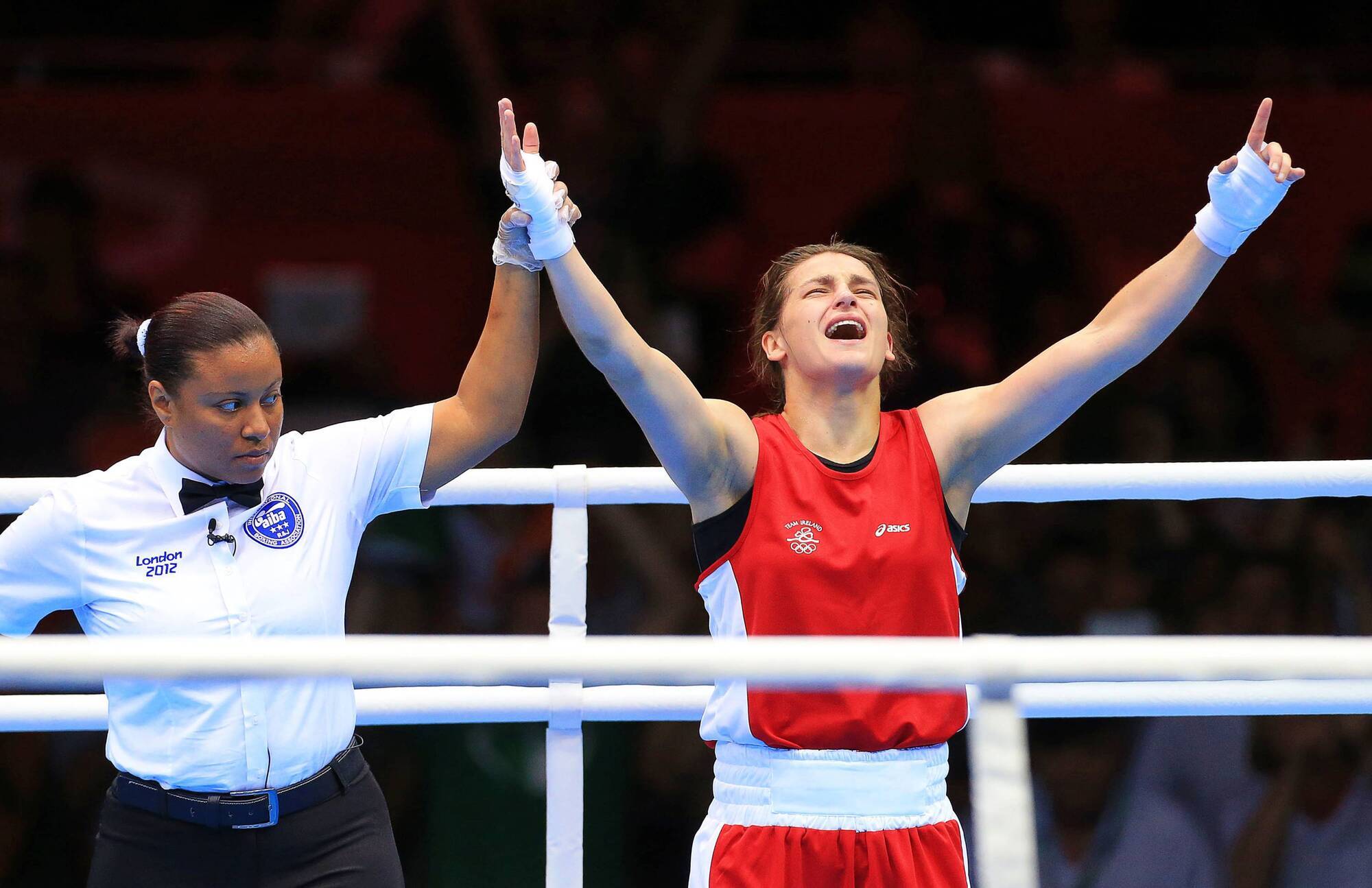


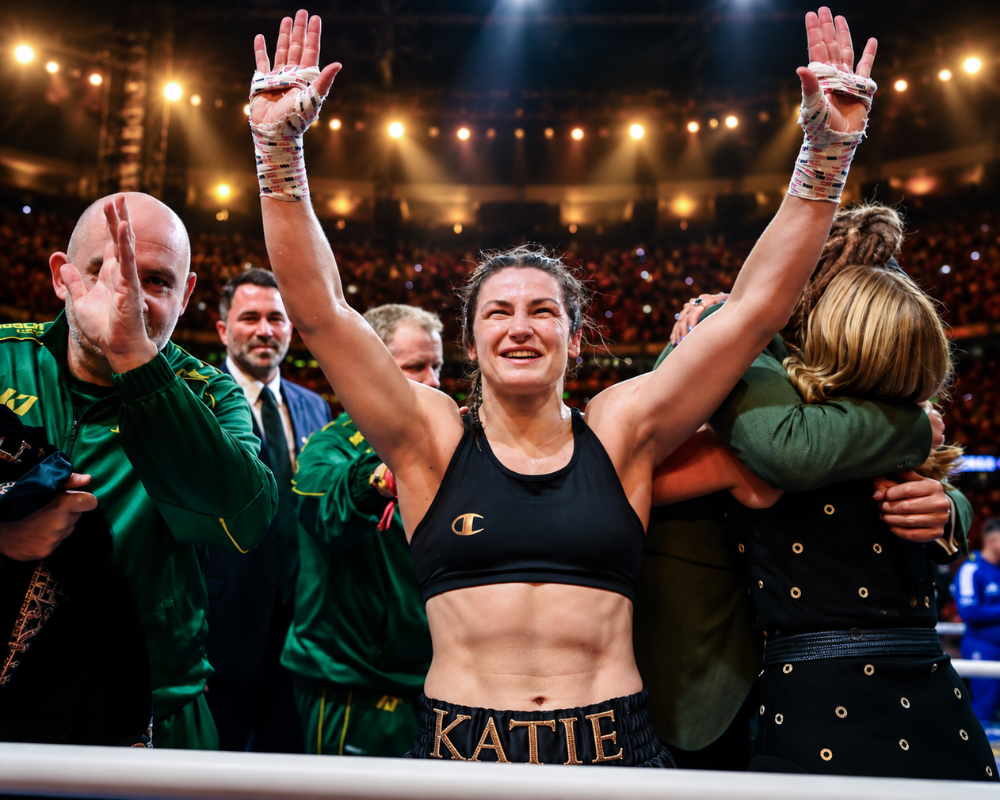
For one last round, Ireland watched Katie Taylor.
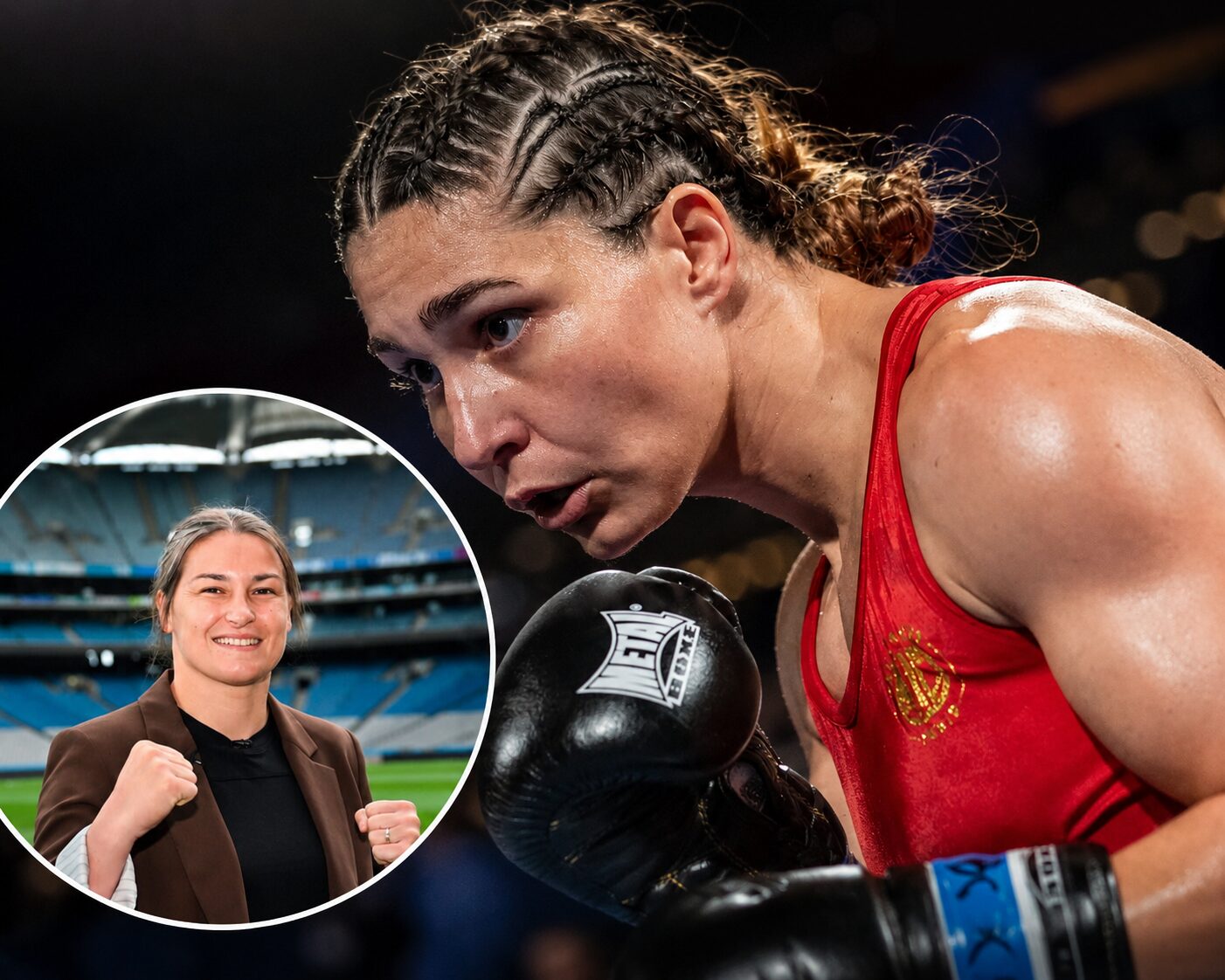
Round 10 at Croke Park peaked at 1.6 million viewers on RTÉ television. The full programme averaged 973,000 viewers, took a 74% share of the available audience, and drew 552,000 streams on RTÉ Player. In the stadium, 83,000 people were there to see Taylor beat Flora Pili and finish her career as a three-time undisputed world champion.
Those are television figures. They are also something closer to a national headcount.
Saturday night felt like one of those rare Irish sporting nights where the audience stretched well beyond the sport itself. Boxing people watched. Families watched. Children watched. People who had followed Taylor from the National Stadium watched. People who could barely explain a super-lightweight title watched. The final round became an appointment with the end of a career that has sat inside Irish public life for more than two decades.
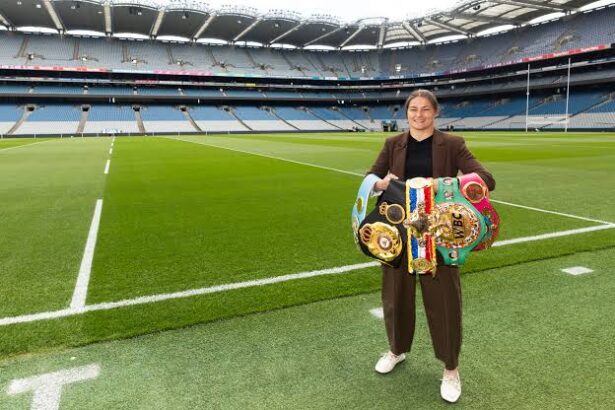
Taylor won clearly. The scorecards read 100-90, 100-90 and 98-91, a clean, controlled end against the previously unbeaten Pili. She defended her WBO, WBA, IBF and Ring Magazine titles, won the WBC belt, and placed the gloves down after one final professional win.
More Read
Sport does not always give endings like this. Boxing is particularly bad at it. Too many great fighters leave late, hurt, beaten, reduced by the very thing that made them great. Taylor got Croke Park. She got the walk. She got the last bell. She got the belts. She got to leave with the whole place standing for her.
There has been plenty of debate over the past week about where she sits in the history of Irish sport. The answer depends on what people value. Some will start with Olympic gold. Some with world titles. Some with longevity. Some with skill. Some with what an athlete does to a country’s sense of itself.
That last part is hard to measure. It is also impossible to ignore.
Muhammad Ali is not treated as one of the defining sportspeople of the 20th century because of a clean argument about technique. His place is bigger than that. Sport, at that level, becomes about reach, meaning, timing, courage, imagination. The athlete becomes part of the world outside the ring.
Taylor’s Irish case lives there too.
She was 15 when she fought in Ireland’s first officially sanctioned women’s boxing bout in 2001. Women’s boxing was added to the Olympic programme for London 2012. Taylor went there as the face of the sport’s arrival and came home with gold. As an amateur, she won five consecutive World Championship titles and six European titles. As a professional, she became undisputed at lightweight and super-lightweight.
The record is extraordinary. The route is the reason people feel it so deeply.
A girl from Bray started in a sport that had spent years telling girls no. She kept going until the biggest stadium in Ireland was built around her last fight. She kept going until boys and girls knew her as one of the country’s heroes. She kept going until a female athlete headlining Croke Park felt less like a miracle and more like something she had dragged into reality.
RTÉ’s numbers belong in that story. A peak of 1.6 million. More than half a million streams. A crowd of 83,000. A final round that pulled a country towards the same screen. RTÉ called it a “national moment”, and for once the phrase fits.
Taylor became the first boxer to headline a fight night at GAA headquarters since Muhammad Ali in 1972. She did it as the central act, the reason for the crowd, the reason for the broadcast, the reason the place sounded the way it did.
At Her Sport, we talk about visibility every day because it changes what young people think is normal. Katie Taylor has given Ireland years of that. Girls have grown up watching her carry belts, medals and expectation. Boys have grown up with Katie Taylor as part of the country’s sporting language. Parents who once may never have watched women’s boxing stopped what they were doing to see her final walk.
The last few seconds said a lot. Taylor was winning comfortably, with nothing left to prove, and still emptied what she had into the finish. That has always been part of the appeal. No performance. No noise for the sake of it. Work, belief, discipline, again and again and again.
Ireland has many great athletes.
For us, the greatest sportsperson this country has produced is a woman from Bray.