

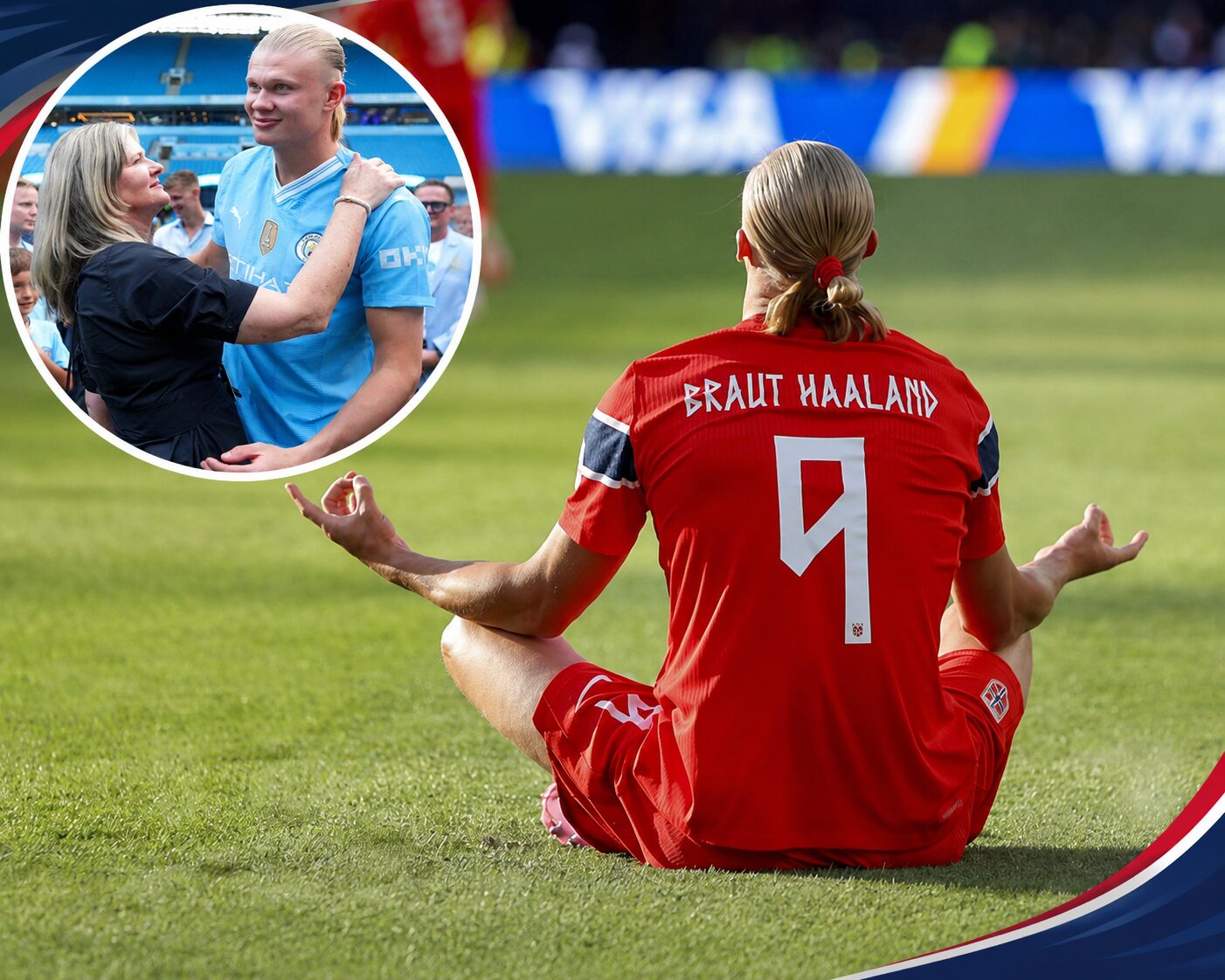
On the back of Erling Haaland’s Norway shirt, one extra word has done what football rarely does with any efficiency: it has made his mother visible.
The goals were always going to dominate the conversation. Haaland scored twice as Norway beat Iraq 4-1 in their 2026 World Cup opener, marking his arrival on the tournament stage with the sort of blunt inevitability that has come to define him.
Then came the shirt.
For Manchester City, he is Haaland. Clean, global, marketable, instantly recognisable. For Norway, he is wearing Braut Haaland. Braut comes from his mother, Gry Marita Braut. Haaland comes from his father, Alf-Inge Haaland. In Norwegian culture, the use of both maternal and paternal names is common. In football culture, the visibility of the mother’s name still feels unusually significant.
That says something.
For years, Haaland’s footballing inheritance has been easy to package through his father. Alf-Inge Haaland was a professional footballer, played in England, represented Norway, and has long been a familiar reference point in Erling’s rise. It is a neat sporting lineage, simple enough for television graphics and pre-match packages. Father plays football. Son becomes one of the most devastating forwards in the game. The story almost writes itself.
Gry Marita Braut complicates that neatness in the best possible way. She was a Norwegian heptathlon champion, an elite athlete in one of the most demanding events in track and field. The heptathlon asks for range rather than specialisation: 100m hurdles, high jump, shot put, 200m, long jump, javelin and 800m. Speed, power, rhythm, endurance, technique, nerve. Seven events. Two days. Very little room for weakness.
When people describe Haaland, they often reach for machine language. He is a robot, a cyborg, a glitch in football’s physics engine. It is a familiar response to any athlete whose body seems to have been assembled in a laboratory with questionable ethical oversight. Yet the more human explanation may be sitting in plain sight. He is the son of two elite athletes. One was a footballer. One was a heptathlete. His sporting inheritance did not come from one line. It came from both.
The heptathlon is a useful corrective to how athletic greatness is often understood. Football tends to obsess over the finished product: the goal, the celebration, the market value, the boot deal, the slow-motion close-up. Athletics is less forgiving. It reveals the body as a long-term project, built through repetition and exposed through measurement. The clock does not care about narrative. The bar does not care about surname. The javelin lands where it lands.
To become a national champion in that environment requires far more than general athleticism. It requires discipline across multiple forms of pressure. It requires being able to move from explosive speed to technical control, from power to endurance, from one failure to the next event without the luxury of emotional collapse. There is something quietly brutal about that. There is also something deeply admirable.
For Her Sport, that is the point worth holding onto. The story is not that Erling Haaland has a famous mother. The story is that his mother had her own sporting identity before the world became interested in tracing his. She competed. She won. She built an athletic life worthy of recognition on its own terms.
Sport loves bloodlines when they pass through men. It knows how to speak about sons of footballers, sons of managers, sons raised around dressing rooms and stadium corridors. It is less fluent when the inheritance comes through women, even when the evidence is obvious. In Haaland’s case, the evidence is now printed across his back.
There is something quietly powerful in that. Not sentimental. Not dramatic. Powerful.
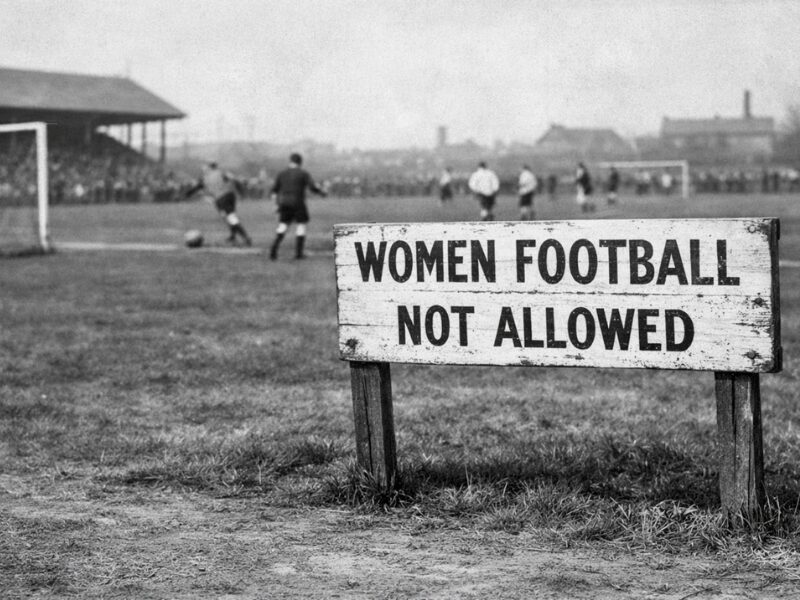
The name Braut does not reduce Haaland’s father’s influence. It completes the picture. It reminds us that sporting greatness is rarely produced by one source, one surname, one neat origin story. It also reminds us that women’s sport has always shaped the athletes, families and cultures around it, even when history has been slow to write that down properly.