On a wet evening in Bray, when the running track was washed out and the roads were slick with Wicklow rain, a twelve-year-old girl wandered into a boxing gym and found a future she had not yet been allowed to imagine. Katie Taylor did not walk into St Fergal’s Boxing Club intending to change a sport. She walked in because she wanted to train, because she had watched her father shadowbox in the kitchen, because she had sparred with her brothers at home, because she already knew how to throw a punch. The ring, when she finally stepped through the ropes, felt less like a place of arrival than of recognition.
The gym smelt of sweat, leather and damp canvas. The heavy bags thudded. The lads were sparring. She pulled on headgear, tucked her ponytail inside, registered as K Taylor, and began trading punches with boys who did not yet know that the person in front of them was not supposed to be there. By the time her father noticed, she was already sparring.
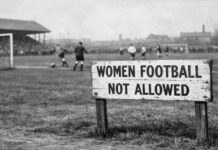
Boxing, in Ireland in the 1990s, did not have a place for girls. Women’s boxing was prohibited at all ages. There were no sanctioned fights. There was nowhere to compete. It would take four years of lobbying before Irish boxing authorities allowed women to box officially. Even then, Taylor had to disguise herself to get bouts. She became ‘K Taylor’, because the sport had not yet decided what to do with Katie Taylor.
She had grown up in Bray in a family that did not have much money but did have boxing. Her father Peter was Irish light-heavyweight champion in 1986 and later opened a club that would become central to her career. Her mother Bridget was the first female boxing judge in Ireland. Her two brothers boxed. The sport was in the walls of the house, in the gloves left on kitchen chairs, in the sound of skipping ropes slapping the concrete. When women were finally allowed to box officially, Taylor was fifteen. In 2001, she defeated Alanna Audley in the first sanctioned women’s bout in Ireland. The ban had been broken, but the ceiling remained low.
Taylor’s talent was never narrow. She ran, she played Gaelic games, she played football at international level for Ireland. On the pitch at Newtown Juniors, she was voted the best under-12 player in Wicklow, boy or girl. The league had to be persuaded to let her play another year. She won player of the year again. The lads tried to kick her. She came back harder. The rules bent when her ability forced them to.
By the time she reached her twenties, she had already defeated more than 100 opponents. She became a multiple-time European champion, a five-time world champion, the dominant amateur boxer of her generation. Yet the biggest fight of her career was not one she could win inside the ropes. Women’s boxing did not exist at the Olympics. Men went to Beijing in 2008. Women watched from home. Taylor trained just as hard as the men. She won just as often. She was barred by structure rather than ability.
So she did what she always did. She fought the structure.
First, she worked domestically. Women’s bouts had to be legalised. Then she turned outward. The IOC needed convincing that women’s boxing was not novelty or curiosity but sport of elite standard. Taylor became the sport’s argument in motion. She boxed in front of IOC officials in Chicago in 2007 and St Petersburg in 2009. She fought not for titles, but for legitimacy. She called it pressure like nothing else she had experienced. These were fights where losing meant losing the sport’s future. When she later spoke about pressure in professional bouts, she described those showcase fights as heavier. They were not about her. They were about every woman who had ever been told boxing was not for her.
In 2009, women’s boxing was finally approved for the London 2012 Olympic Games. It had taken more than a century since boxing appeared as a demonstration sport in 1908. In Britain, women’s boxing had been banned outright until 1996. The British Boxing Board of Control refused women licences until Jane Couch won a discrimination case in 1998. Even after legality, gyms were reluctant. Fights were scarce. The infrastructure lagged. Taylor’s success did not create the opportunity alone, but it became impossible to deny the standard she set.
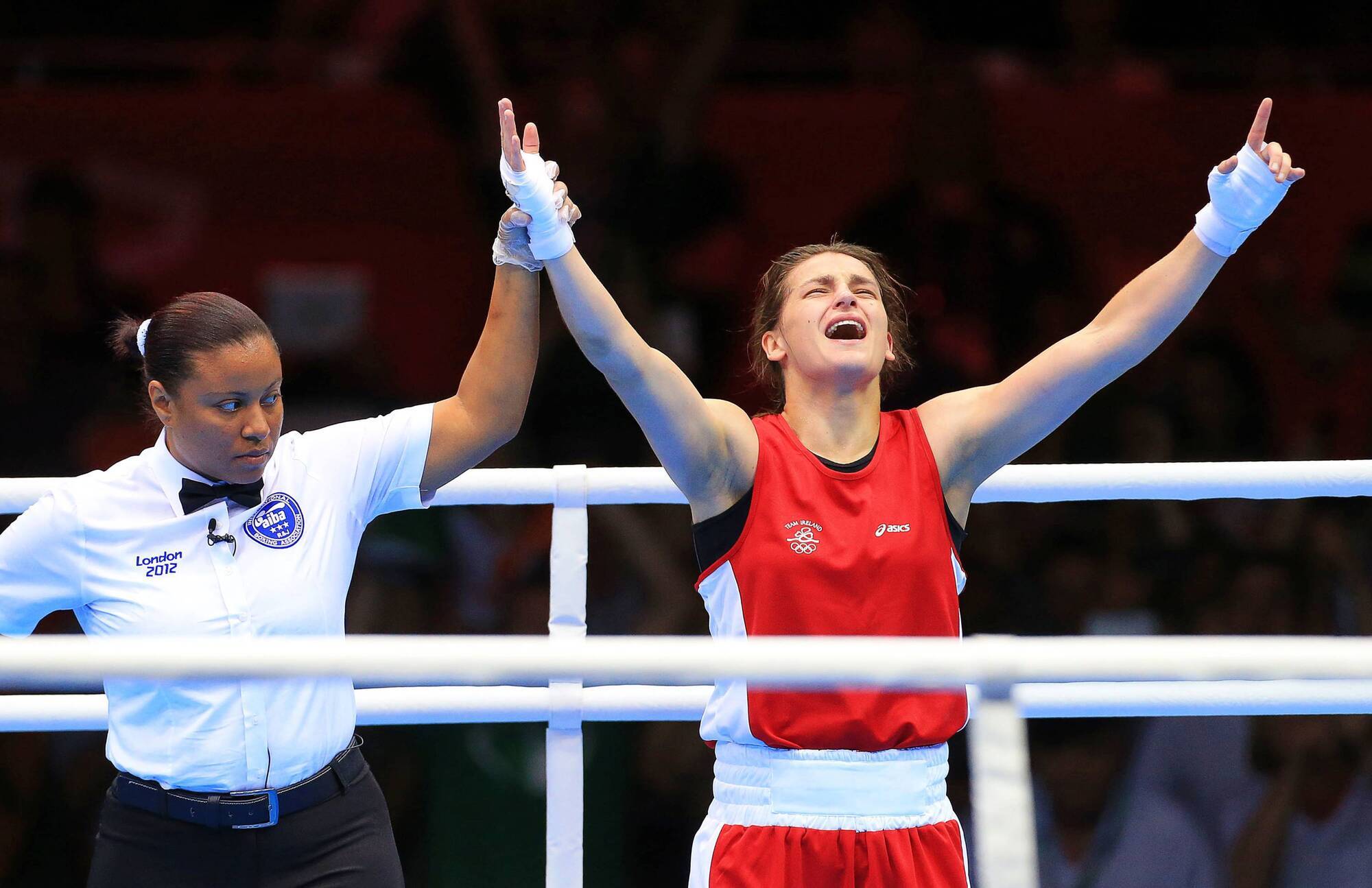
At London 2012, she carried more than a nation’s hopes. She carried the proof of concept. In the final, she defeated Sofya Ochigava to win Olympic gold. It was twenty years after Michael Carruth’s gold in Barcelona. It felt like symmetry, but it was something else entirely. It was arrival. Women’s boxing did not enter the Olympics quietly. It entered crowned.
Four years later, in Rio, she arrived as favourite and left in the first round. The defeat to Mira Potkonen felt abrupt, almost careless in public reaction. The analysis drifted toward age, reflexes, margins. Inside the camp, the story was different. Taylor’s parents’ marriage had broken down. She had separated professionally from her father, the man who had trained her all her life. She spoke later of feeling like she was missing her right arm when she stepped into the ring without him. The sport noticed the loss of a fight. It did not see the weight of a year.
She went professional later in 2016. The move felt less like escape than recalibration. In Connecticut, training alone with Ross Enamait under grey skies, she stripped her life back to the rhythm of work. In seven fights, she won a world title. She became undisputed at lightweight, then at super lightweight. She fought in sold-out arenas. She fought with the same neat economy she had always carried, the same refusal to inflate herself.
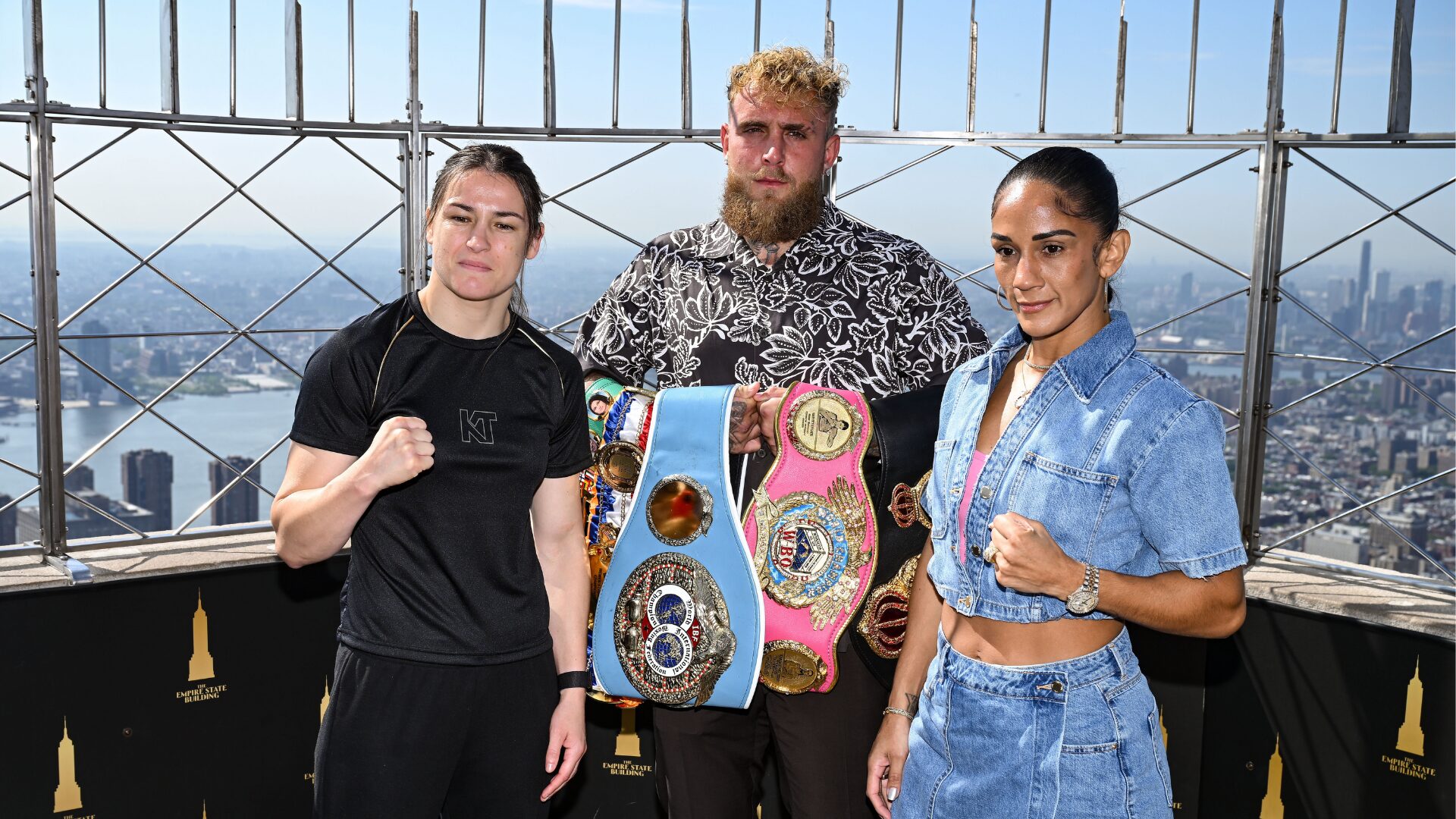
In 2022, she fought Amanda Serrano at Madison Square Garden. Two women headlining boxing’s most mythologised venue. The fight was ferocious, technical, unrelenting. Taylor won on a split decision. The rematch in 2024 drew an estimated 74 million viewers worldwide. A trilogy followed. The rivalry became something like an axis around which women’s boxing could spin into public imagination. These were not exhibitions. They were elite fights staged at the sport’s most sacred address.
By then, Taylor had become something difficult to define neatly. She was a professional star who did not court celebrity. She was the face of a movement who resisted the language of being a symbol. She spoke of responsibility, of setting example, but never of entitlement. She thanked the women who came before her. She named Christy Martin, Deirdre Gogarty, Lucia Rijker, Laila Ali. She understood that her story made sense only inside a longer one.
Her legacy is now visible in numbers as much as in memory. At Paris 2024, Team Ireland named its largest Olympic boxing squad since Rome 1960. Only Australia and Uzbekistan sent more boxers. Ireland became one of only three nations to qualify women in every Olympic weight class. Twelve years earlier, in London, Ireland had a single woman in the boxing team. It was Katie Taylor. In Paris, they had six.
That is what structural change looks like when it finally takes hold. Not one woman breaking through a door. A generation walking through it.
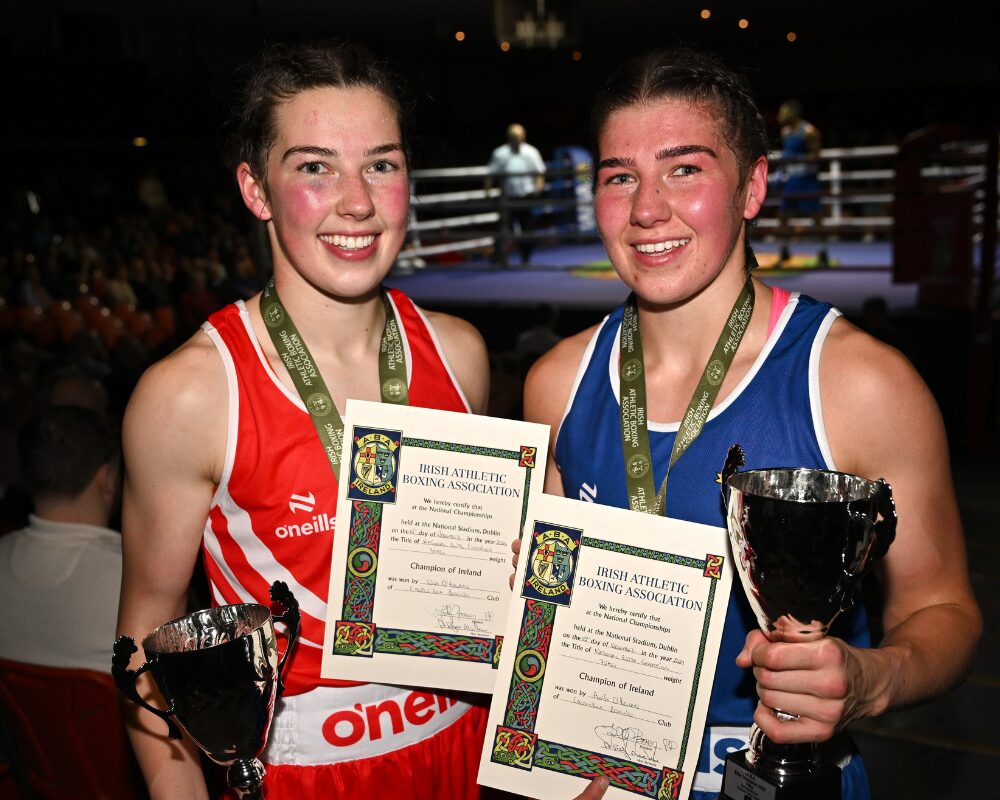
There is a mural of her in Phibsborough. There are billboards of her face in Manhattan. There are banners in Bray hotels that read well done Katie. But her most durable work is quieter. Half the boxers at her home club are now female. Girls no longer register as K Taylor. They register as themselves. The sport she once had to sell now sells itself.
When women box at the Olympics now, nobody asks why. That absence of the question is the measure of the change. It did not arrive by decree. It arrived because one fighter kept stepping into spaces she had been told were not for her, and because she won often enough, long enough, that the walls eventually stopped pretending they were permanent.