
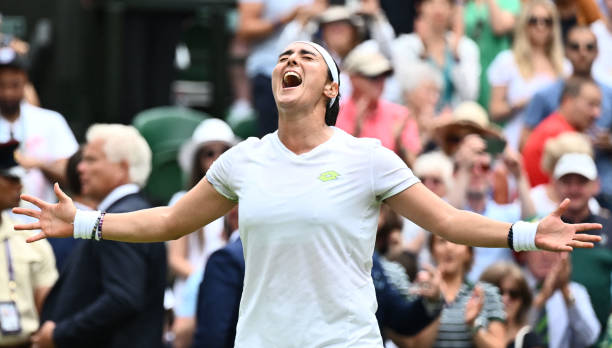
“It’s About Respect”: French Open Gender Equality Debate Intensifies
The French Open gender equality controversy is heating up, as players, media figures, and fans speak out against the overwhelming lack of women’s matches in prime-time slots. At the centre of this growing movement is Tunisian tennis star Ons Jabeur, who has openly criticized tournament organizers for marginalizing women’s tennis.
Ons Jabeur: “We Bring the Same Intensity”
In an impassioned open letter and several media appearances, Jabeur expressed her disappointment in how women’s tennis is being sidelined.
“We bring the same intensity, the same excitement,” she stated. “Women’s tennis deserves the spotlight too.”
Jabeur’s comments come in response to data showing that since 2021, over 90% of French Open night-session matches on Court Philippe-Chatrier have featured men. The imbalance, she argues, is not just unfair—it’s harmful to the growth and visibility of women’s sports.
WTA Pushes Back on Prime-Time Bias
The Women’s Tennis Association (WTA) has joined the chorus of critics, calling the French Open’s gender scheduling disparity “unacceptable.”
“We will continue to advocate strongly for women to play in all prime-time slots at any tournament,” a WTA spokesperson said in a recent press release.
Their stance underscores a broader movement to achieve balance and fair representation in professional tennis.
Media Outlets Join the Conversation
Broadcasters and journalists are also taking a stand. Speaking on ABC News Breakfast, sports journalist Catherine Murphy highlighted the ongoing bias:
“I’ll tell our viewers every day how they are treating the women’s game, because people need to know that.”
Murphy and others argue that without adequate media coverage, female athletes are denied the attention and recognition they’ve earned.
Tournament Director Mauresmo Faces Renewed Scrutiny
Former World No. 1 and tournament director Amélie Mauresmo has come under fire once again. Her 2022 comment that men’s matches were “more appealing” continues to spark backlash.
Though she insists there’s no sexist intent behind the scheduling decisions, many argue that the repeated sidelining of women’s matches sends a clear and damaging message.
Why Prime Time Matters
Night sessions at Grand Slam tournaments are often the most-watched and highest-broadcast slots, offering players significant exposure. Court Philippe-Chatrier, the French Open’s main stadium with a seating capacity of over 15,000, is akin to Wimbledon’s Centre Court. Matches scheduled here during prime time are considered marquee events—crucial for player visibility and fan engagement.
The Path Forward: From Awareness to Action
If the French Open wants to be seen as a tournament that champions the best of tennis, then it needs to reflect that across both tours.
“This is about respect,” Jabeur emphasized. “And we won’t stop speaking out until that respect is real.”